

14 March 2013
A Canadian architect has come to New Zealand this week rooting for the use of building designs with a "feel good" factor.
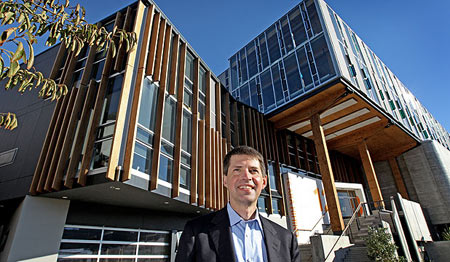
Farrow Partnership Architects senior partner Tye Farrow, an expert in the use of wood-rich architecture, has designed some of the largest public hospitals in Canada.
Identified by the World Congress on Design and Health as a "global leader" in health design, he believed wood was an under-used product in the construction of commercial-sized buildings.
Architecture which makes people feel well was based on a simple idea called salutogenesis, he said."Salutogenesis talks about true health, not healthcare, what makes you healthy and what causes health. "It is the concept that, depending on how you saw or framed the environment around you and your body, the chemicals within it would either create comfort or stress."
Farrow said his company tried to recreate notions of hospital design, citing traditional hospitals where "form follows function". "Often they haven't been the most inspiring place to go to, either to heal or work.
"So the question was, how could you begin to create a healing environment or a working environment that in fact makes you feel good and helps with the healing process?"
Talking with families and hospital patients in Europe had helped Farrow's company identify the need for more natural products in hospitals.
"One lady we connected with said, ‘I just want to see something that is alive'.
"So we started working in wood and began to discover it was extraordinary because people really started to radiate and connect to it."
He said people assumed engineered timber was more expensive to use than products such as steel and concrete.
Canada's Ministry of Health only awarded Farrow the contracts to build various healthcare facilities once he had convinced them of wood's economic worth, however.
"We did a full cost and comparison with another hospital being built, and we were slightly below the average cost."
Hamish McNicol - stuff.co.nz